



CYP17
CYP17A1 encodes cytochrome P450 17A1, a steroidogenic enzyme that catalyzes both 17α-hydroxylase and 17,20-lyase reactions required for glucocorticoid and sex steroid biosynthesis, thereby controlling the production of androgen precursors such as dehydroepiandrosterone (DHEA) within endocrine tissues.[1][2] Mechanistically, CYP17A1 occupies a central position in steroidogenesis because its 17,20-lyase activity represents the first committed step in androgen biosynthesis, linking cholesterol-derived steroid intermediates to testosterone and dihydrotestosterone synthesis.[3][4] Therefore, CYP17A1 functions as an essential regulatory node in androgen signaling pathways that support the growth and progression of castration-resistant prostate cancer (CRPC).[5][6] In disease models, increased steroidogenic activity and persistent intracrine androgen signaling have been associated with therapeutic resistance, and CYP17A1 upregulation has been identified as one mechanism contributing to resistance against androgen biosynthesis blockade.[5][7] Compared with related steroidogenic cytochrome P450 enzymes, CYP17A1 is distinguished by its dual catalytic activities, which determine whether steroid metabolism is directed toward glucocorticoid or sex steroid production.[2] For experimental and therapeutic applications, CYP17A1 inhibitors such as abiraterone suppress androgen synthesis by targeting both hydroxylase and lyase activities, although concomitant inhibition of cortisol synthesis can induce mineralocorticoid-related adverse effects.[3][8] Consequently, selective CYP17A1 lyase inhibitors have been developed to reduce androgen production while minimizing disruption of glucocorticoid homeostasis.[3][9]
References:
- [1]. Burris-Hiday SD, et al. Steroidogenic cytochrome P450 17A1 structure and function. Mol Cell Endocrinol. 2021 May 15;528:111261. [Content Brief]
- [2]. Fernández-Cancio M, et al. Mechanism of the Dual Activities of Human CYP17A1 and Binding to Anti-Prostate Cancer Drug Abiraterone Revealed by a Novel V366M Mutation Causing 17,20 Lyase Deficiency. Pharmaceuticals (Basel). 2018 Apr 29;11(2):37. [Content Brief]
- [3]. Maity SN, et al. Targeting of CYP17A1 Lyase by VT-464 Inhibits Adrenal and Intratumoral Androgen Biosynthesis and Tumor Growth of Castration Resistant Prostate Cancer. Sci Rep. 2016 Oct 17;6:35354. [Content Brief]
- [4]. Auchus RJ. Steroid 17-hydroxylase and 17,20-lyase deficiencies, et al. Steroid 17-hydroxylase and 17,20-lyase deficiencies, genetic and pharmacologic. J Steroid Biochem Mol Biol. 2017 Jan;165(Pt A):71-78. [Content Brief]
- [5]. Mostaghel EA, et al. Resistance to CYP17A1 inhibition with abiraterone in castration-resistant prostate cancer: induction of steroidogenesis and androgen receptor splice variants. Clin Cancer Res. 2011 Sep 15;17(18):5913-25. [Content Brief]
- [6]. Cheong EJY, et al. Slow-, Tight-Binding Inhibition of CYP17A1 by Abiraterone Redefines Its Kinetic Selectivity and Dosing Regimen. J Pharmacol Exp Ther. 2020 Sep;374(3):438-451. [Content Brief]
- [7]. Abiraterone resistance mediated by CYP17A1 induction and androgen receptor splice variants. Nat Rev Urol 8.
- [8]. Attard G, et al. Clinical and biochemical consequences of CYP17A1 inhibition with abiraterone given with and without exogenous glucocorticoids in castrate men with advanced prostate cancer. J Clin Endocrinol Metab. 2012 Feb;97(2):507-16. [Content Brief]
- [9]. Bonomo S, et al. Promising Tools in Prostate Cancer Research: Selective Non-Steroidal Cytochrome P450 17A1 Inhibitors. Sci Rep. 2016 Jul 12;6:29468. [Content Brief]
All Product Categories
-
CYP17 Related Products (18)
Related Products (18)

-
Antibodies (2)
- 1
-
Abiraterone
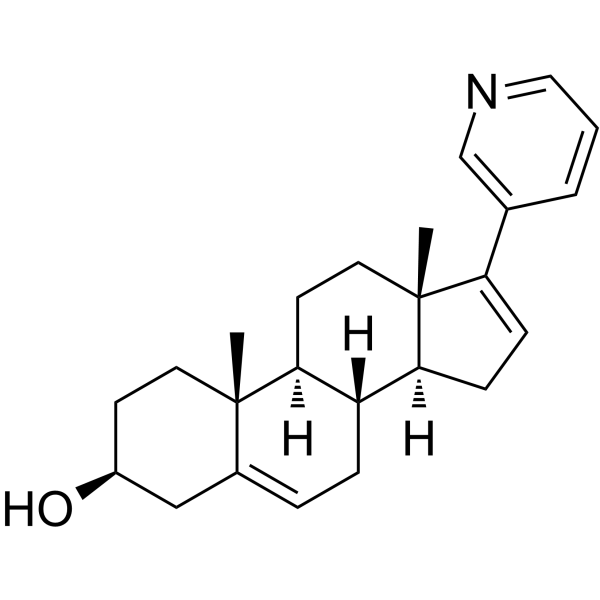 0 ImagesSynonyms: CB-7598Abiraterone is a potent and irreversible CYP17A1 inhibitor with antiandrogen activity, which inhibits both the 17α-hydroxylase and 17,20-lyase activity of the cytochrome p450 enzyme CYP17 with IC50s of 2.5 nM and 15 nM, respectively.
-
Galeterone
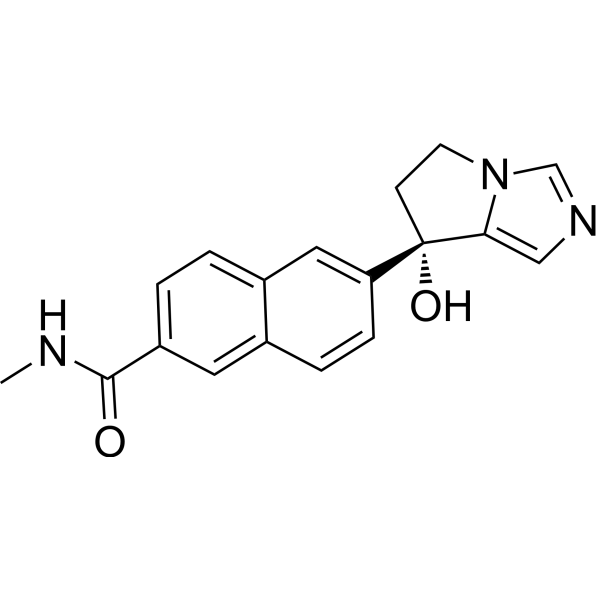
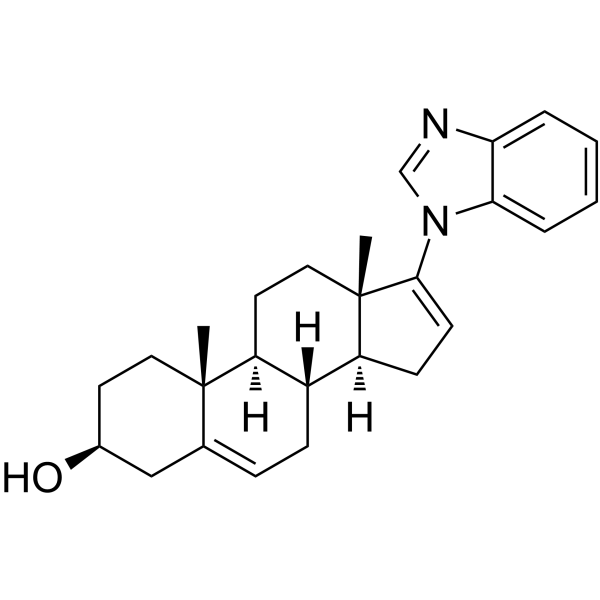 0 ImagesSynonyms: TOK-001; VN-124-1Galeterone (TOK-001) is a potent, orally active molecular glue degrader, which degrades androgen receptor (AR) and its splice variants (AR-Vs) and MAP kinase-interacting serine/threonine protein kinase Mnk1/2. Galeterone also functions as a CYP17 inhibitor (IC50 = 47 nM). Galeterone induces cell apoptosis. Galeterone inhibits tumor growth in human prostate cancer xenograft mouse models. Galeterone can be used for castration resistant prostate cancer (CRPC) and pancreatic ductal adenocarcinoma (PDAC) research[1][2].
-
Abiraterone acetate (Standard)
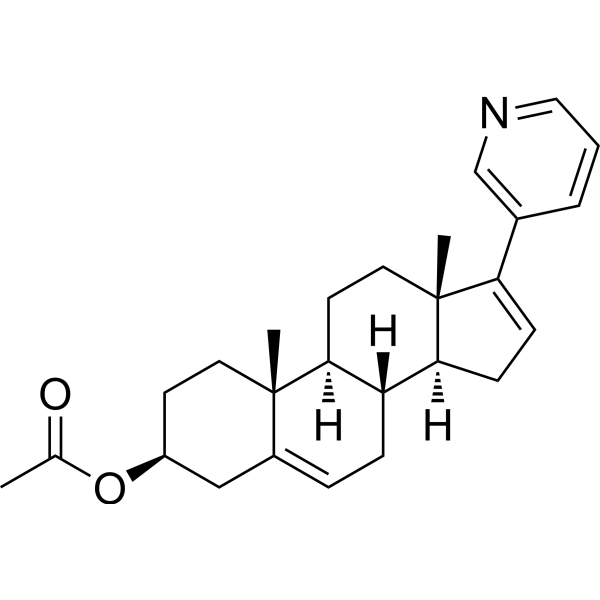
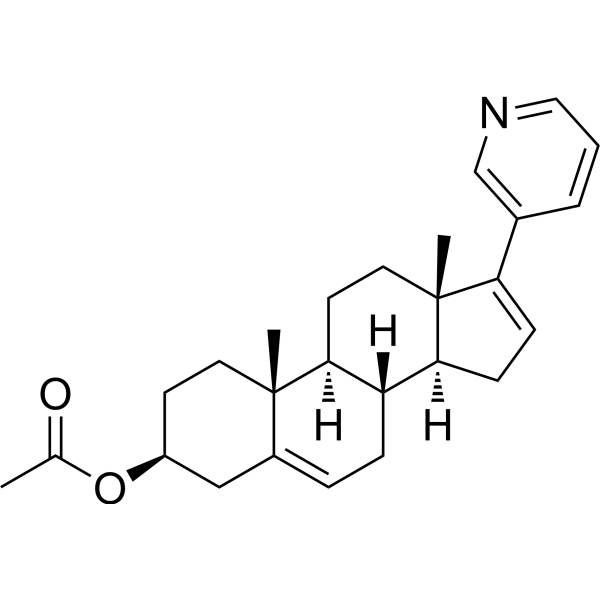 0 ImagesSynonyms: CB7630 (Standard)Abiraterone acetate (Standard) is the analytical standard of Abiraterone acetate. This product is intended for research and analytical applications. Abiraterone acetate (CB7630) is an oral, potent, selective, and irreversible inhibitor of CYP17A1 with antiandrogen activity. Abiraterone acetate is a proagent form of Abiraterone (CB7598).
-
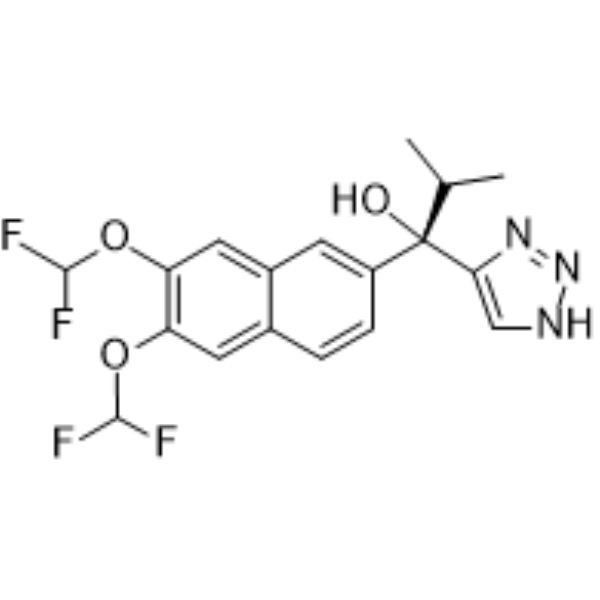
D4-abiraterone
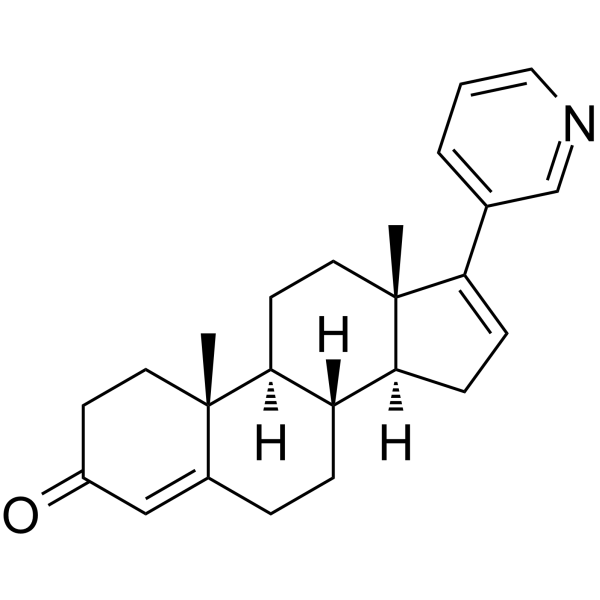 0 ImagesSynonyms: Δ4-Abiraterone; CB-7627; Abiraterone D4A metaboliteD4-abiraterone is a major metabolite of abiraterone. D4-abiraterone is an inhibitor of CYP17A1, 3b-hydroxysteroid dehydrogenase (3βHSD) and steroid-5a-reductase (SRD5A) and also an antagonist of androgen receptor.
-
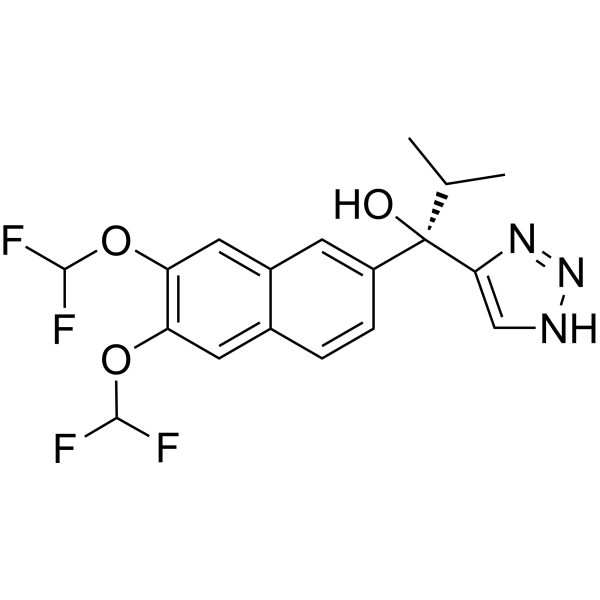
Lapiteronel
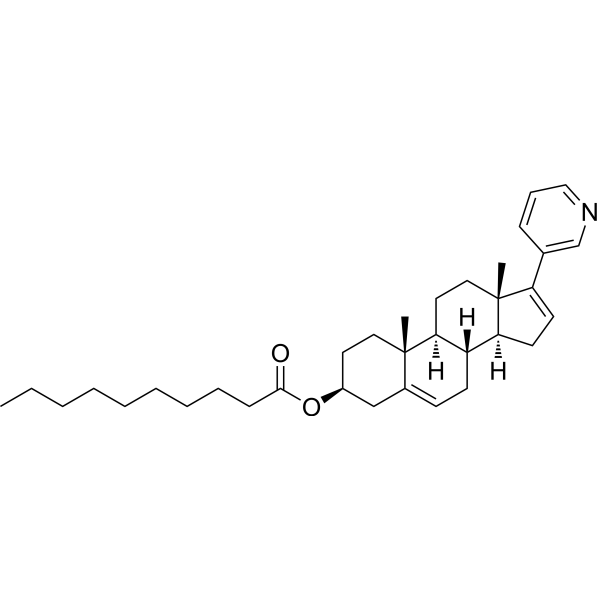
 0 ImagesSynonyms: CFG920Lapiteronel (CFG920) is an orally active, nonsteroidal, reversible dual CYP17 and CYP11B2 inhibitor. Lapiteronel has the potential for metastatic castration-resistant prostate cancer research.
-
Pentacosafluorotridecanoic Acid
 0 ImagesCat. No.: HY-W679754CAS No.: 72629-94-8Synonyms: PFTrDAPentacosafluorotridecanoic Acid (PFTrDA) is a long-chain perfluoroalkyl carboxylic acid with strong endocrine-disrupting activity. Pentacosafluorotridecanoic Acid exhibits estrogenic effects and disrupts vtg1 transcription as well as sex hormone homeostasis in male Danio rerio. Pentacosafluorotridecanoic Acid disturbs steroidogenesis and HPG axis function in a sex-dependent pattern. Pentacosafluorotridecanoic Acid inhibits CYP17A and CYP11A1 to reduce testosterone and increase E2/T ratio in H295R cells. Pentacosafluorotridecanoic Acid triggers gender-specific immunomodulation after prenatal exposure. Pentacosafluorotridecanoic Acid correlates with lower eczema risk in female infants. Pentacosafluorotridecanoic Acid can be used for the research of endocrine disruption and eczema.
-
Tongkat Ali Extract
 0 ImagesCat. No.: HY-N13215Tongkat Ali Extract is the extract of Tongkat Ali, a testosterone modulator. Tongkat Ali Extract activates CYP17 enzyme to enhance conversion of pregnenolone and progesterone to dehydroepiandrosterone, androstenedione, and testosterone. Tongkat Ali Extract demonstrates antimalarial, antimicrobial, anticancer, and antidiabetic activity. Tongkat Ali Extract can be used for the research of diabetic and male infertility.
-
ODM-204
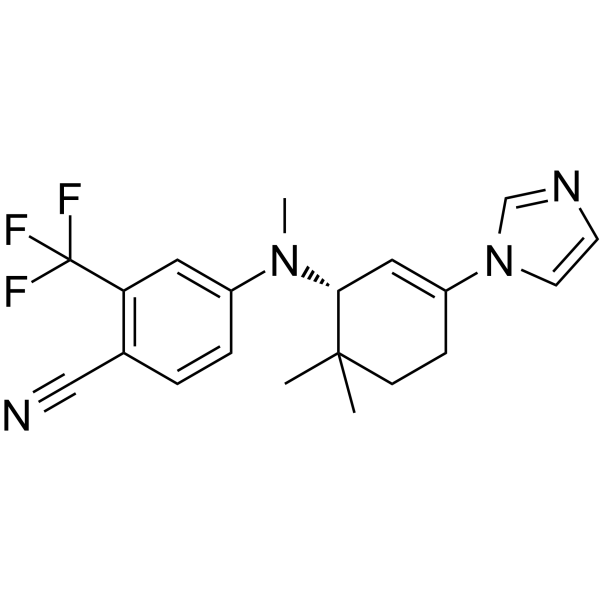 0 ImagesCat. No.: HY-111421CAS No.: 1642818-64-1ODM-204 is novel nonsteroidal dual inhibitor of both androgen receptor and CYP17A1 enzyme, with IC50s of 80 nM and 22 nM, respectively.
-
CYP17-IN-1
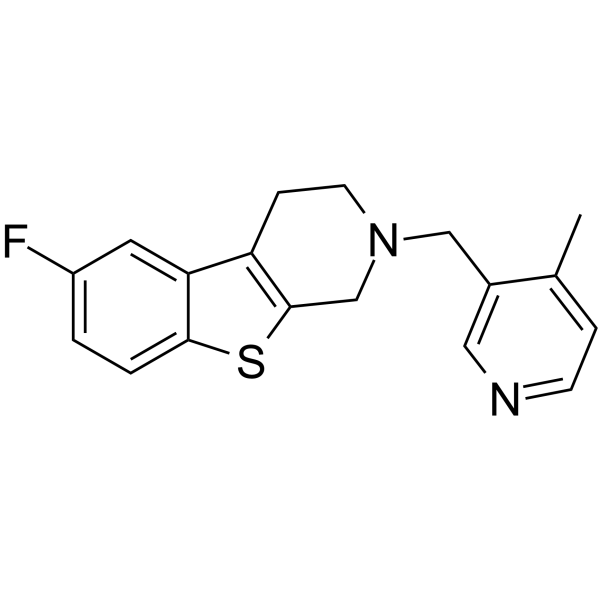 0 ImagesCat. No.: HY-101516CAS No.: 2093317-51-0
-
CYP17A1-IN-1
 0 ImagesCat. No.: HY-172173CYP17A1-IN-1 (Compound 14) is the inhibitor for CYP17A1 with an IC50 of 26 nM. CYP17A1-IN-1 exhibits cytotoxicity in androgen-sensitive prostate cancer cell LNCaP, inhibits the migration of cell DU-145.
-
Galeterone hydrochloride
 0 ImagesCat. No.: HY-70006ACAS No.: 1239339-17-3Synonyms: TOK-001 hydrochloride; VN-124-1 hydrochlorideGaleterone (TOK-001) hydrochloride is a potent, orally active molecular glue degrader, which degrades androgen receptor (AR) and its splice variants (AR-Vs) and MAP kinase-interacting serine/threonine protein kinase Mnk1/2. Galeterone hydrochloride also functions as a CYP17 inhibitor (IC50 = 47 nM). Galeterone hydrochloride induces cell apoptosis. Galeterone hydrochloride inhibits tumor growth in human prostate cancer xenograft mouse models. Galeterone hydrochloride can be used for castration resistant prostate cancer (CRPC) and pancreatic ductal adenocarcinoma (PDAC) research[1][2].
-
Pentacosafluorotridecanoic Acid (Standard)
 0 ImagesCat. No.: HY-W679754RCAS No.: 72629-94-8Synonyms: PFTrDA (Standard)Pentacosafluorotridecanoic Acid (Standard) is the analytical standard of Pentacosafluorotridecanoic Acid (PFTrDA) (HY-W679754). This product is intended for research and analytical applications.Pentacosafluorotridecanoic Acid is a long-chain perfluoroalkyl carboxylic acid with strong endocrine-disrupting activity. Pentacosafluorotridecanoic Acid exhibits estrogenic effects and disrupts vtg1 transcription as well as sex hormone homeostasis in male Danio rerio. Pentacosafluorotridecanoic Acid disturbs steroidogenesis and HPG axis function in a sex-dependent pattern. Pentacosafluorotridecanoic Acid inhibits CYP17A and CYP11A1 to reduce testosterone and increase E2/T ratio in H295R cells. Pentacosafluorotridecanoic Acid triggers gender-specific immunomodulation after prenatal exposure. Pentacosafluorotridecanoic Acid correlates with lower eczema risk in female infants. Pentacosafluorotridecanoic Acid can be used for the research of endocrine disruption and eczema.
- 1




